
Cyberwitches and Feminist Technologies
GENERAL INFO
- LED BY
-
Carmen Lael Hines
- GUEST SPEAKERS
-
Carmen Lael Hines, Cyber_nymphs (Justyna Górowska & Ewelina Jarosz), Francis Whorrall-Campbell, Dr. Tiara Roxanne, Cy X, TBA, Françoise Vergès
- DATES
-
Wednesdays, from September 17th to Oct 22nd, 2024
- TIME
-
6:00 – 8:00 PM (CEST)
- FORMAT
-
4 online sessions via Zoom
- LANGUAGE
-
English
Cyberwitches and Open-Source Feminism(s) is a seminar series designed to place feminist theory in close dialogue with the complexities of cyber-space, technology, and the many philosophical formations that configure digital worlds. Approaching feminism as plurality and spatiality, we will discuss multiple iterations of feminist efforts on a global scale – and work through ways of engaging feminism in developing artistic practices, inside, outside, and between digital environments.
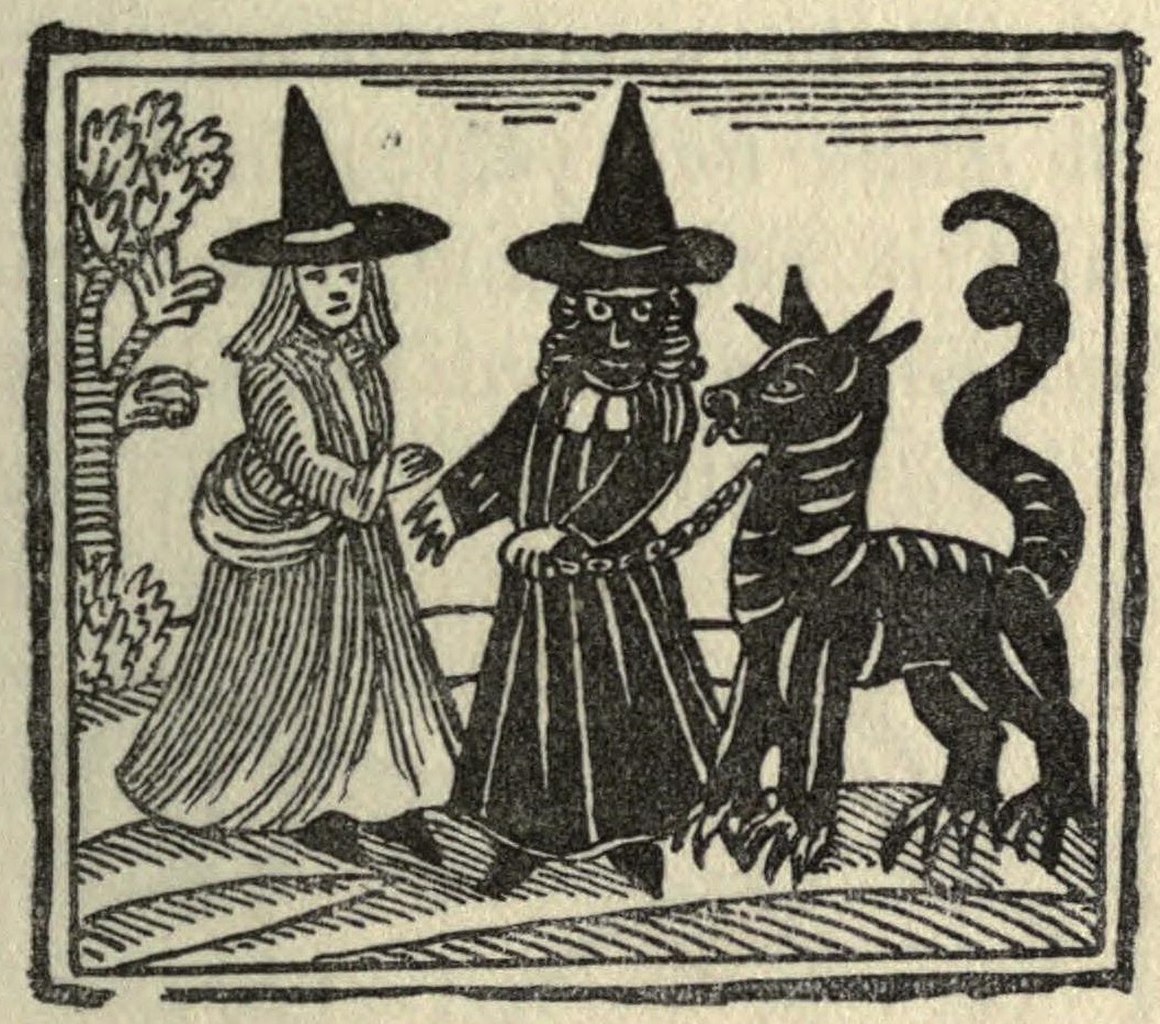
Witches, The Devil in Britain & America
ABOUT
In the historical configuration of “the witch,” we find a space where economic and gendered forms of domination were enacted and solidified. Across the broad field of feminist theory, the category of witch emerges as a method to consider the gender binary as essential to capitalist history, as well as a tool to trouble epistemological binaries of subject and object. In increasingly digitally mediated environments, issues related to the gendered foundations of capitalist relations are fundamental to contextualize the tentacularity of economy. This seminar series will address many branches of feminist approaches to consider the figure of “the witch” as a metaphor of identification with difference, and as a method for approaching feminist perspectives on digital worlds.
Exploring ideas from afro-futurist, cyber, xeno, glitch and un-categorized feminism(s), with guests from the wide web of intersectional feminist theory and new-media/technology studies, we will collectively consider what feminism means, and how to engage it in practice, online and off. What does it mean to become cyber-witches in digital landscapes shaped in and through capitalist forms of production? How can cyberwitch networks shape open-source commons? In essence, how can feminism(s) help us imagine new forms of the digital?
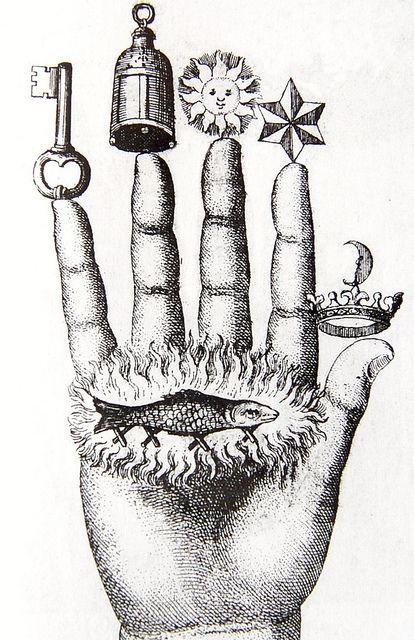
Image from the Alchemical Hermetic Treatise Entitled the Hand of the Philosophers, by J.i Hollandus
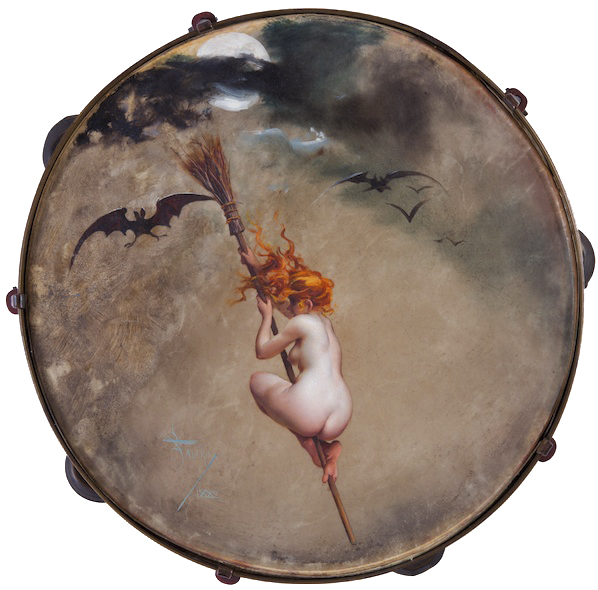
Thewitch, by Luis Ricardo Falero
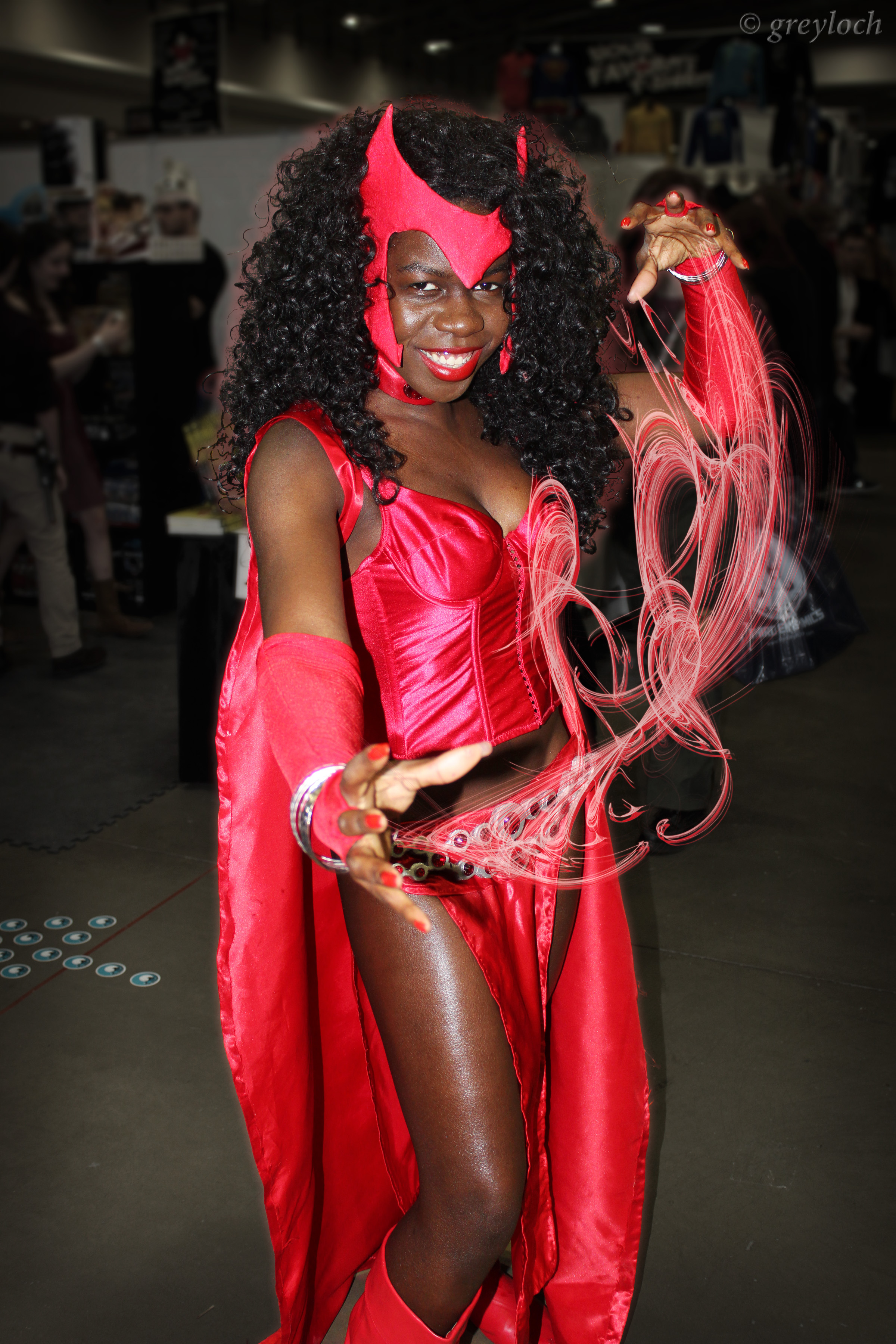
Scarlet the Witch

Brief History of Witchcraft, 1866
SESSIONS
Session I
17 / 9 / 2024
“The Witch” as Method
Materialist-Feminist Approaches to Digital World-Making
Carmen Lael Hines & IPS
In Caliban and the Witch, Silvia Federici shows how the 16th century witch hunts were instrumental in establishing an ontological divide that essentialized productive from reproductive labor. This framework proposes an intersectional feminist reading of capitalist forms of production. Beginning with Federici’s writing and the formation of materialist-feminism as a starting point for discussing the gendered foundations of contemporary capitalism, we will discuss the possibility, or problems, with employing the witch as method for feminist analysis and practice. Engaging configurations such as: gamification, platform(ing), cybernetics and automation, we will consider where and if the figure of the witch can become a method for dismantling capitalist ontologies.
Session II
24 / 9 / 2024
Witching with Cyber- Nymphs, the hydro-sexual movement and eco-technological tools for digital art practice
Cyber_nymphs (Justyna Górowska & Ewelina Jarosz)
In 2023, cyber_nymphs Justyna Górowska and Ewelina Jarosz launched the hydrosexual movement which aimed at fostering a community of artists, academics, and activists exploring cross- and trans- disciplinary approaches to loving waters amidst massive biodiversity loss. The hydrosexual movement invites us to engage our endangered watery embodiments differently amidst the infiltration of dystopian reality.
In this session, cybernymphs will explore queer and feminist approaches to digital art and eco-technologies through practice-based workshops. Delving into methods of understanding, practicing, and communicating water-centered sensualities and sexualities for speculative multi-species futurities, the duo will introduce “cybernymph” hydromythology and showcase their ongoing projects: "Cyber Wedding to the Brine Shrimp," and "The Blue Humanities Archive." The former uses AR, AI and 3D biodegradable printing for environmental art; the latter project, in a similar multi-medial vein, takes the form of a website that will eventually evolve into a biodegradable installation through DNA data storage technology. During the session, participants will be invited to a “Witching with cyber_nymphs” workshop, to activate hydrosexual practices in eco-technological design thinking for the age of the Hydrocene. This session will incorporate elements of playfulness, fun, and joy to challenge conventional perceptions of non/human sea life and thrive with queer feminist perspectives.
Session III
1 / 10 / 2024
Eros Study: Teledildonics
cy x
Welcome to Eros Study: Teledildonics - an eco-techno-sensual practice and design study of the erotics of the internet and its computational companions. We will approach this study from the perspective of the cyber witch and more-than-human perspective rooting in deep embodied knowing, cyberfeminisms, design thinking, and queer theory. Together we will explore how the internet, our devices, and bodies touch each other across space and time, while discussing the possibilities, pleasures, fears, and risks that exist in such encounters.
Session IV
8 / 10 / 2024
Gender Accumulation to Transsexual Revolution?: The witch’s place in forming contemporary trans subjectivity.
Francis Whorrall-Campbell
The session will use Francis’ recent publication THE REVOLUTION WILL NOT HAVE BEEN DOWNLOADED to question the place of the ‘witch’ in the formation of contemporary transgender subjectivity in the Global North.
Keeping in mind the work of Silvia Federici which frames the course, this session will look more closely at analyses of how trans genders are imbricated within the development of modern sexual capitalism. Marxist scholars and writers Kay Gabriel and Jordy Rosenberg have elaborated on the operation of gender as a strategy of primitive accumulation via materialist histories of sex work and synthesised hormones. One of the aims of this session will be to think through these histories in relation to the digital world, acknowledging Avery Dame-Griff’s argument that it was on and because of the internet that a specific transgender (as opposed to transsexual or transvestite) subjectivity was able to emerge. Online spaces are also where Anglophone TERFS have of late begun to claim the early modern witch as an ancestor, using her public vilification to signal their imagined victimisation at the hands of the ‘woke mob’. This is difficult terrain to navigate, and during the session we will attend to strategies for moving forward, for imagining gender beyond accumulation, beyond the witch.
Taking the contention made by the editors of We Want It All: An Anthology of Radical Trans Poetics, that poetry leaps where theory cannot, we will return to THE REVOLUTION WILL NOT HAVE BEEN DOWNLOADED to workshop how speculation, fiction, and analysis might offer us a methodology for getting to grips with these fraught histories while seeking their transformation.
Session V
15 / 10 / 2024
Imagining in Time of War and Wasting
Françoise Vergès
Session VI
22 / 10 / 2024
The De-colonial Gesture: Incantations
Dr. Tiara Roxanne
For this seminar, Dr. Roxanne will lead us through a seminar that encounters Indigenous Feminist Methodologies, somatics and the ritual of incantation as a decolonial gesture. Because decolonization is not possible due to the implication that it requires the settler to give land back to Indigenous peoples, a land that bears the scars of its colonizers. So rather than asking for land back, I am instead interested in active forms of acknowledgment that lean into the somatic, embodied or experiential—or, toward gestures of decolonization especially because the land back movement implies a kind of purity, a kind of coloniality. And an embodied action or willingness in thinking and movement, from somatic processes is what I call the decolonial gesture. A space where we inhabit active and bodily or embodied gestures or actions as moves toward decolonization. For this seminar, we will call on the incantation as a kind of decolonial gesture. We will call on our own interdisciplinary practices and question how they resist the categories of gendered ontology on and offline. We will find the incantation within our work as a kind of cyberfeminist methodology that requires the body alone as well as the body in community.
Session VII
30 / 10 / 2024
Defining Feminist Technology
Helen Hester
Does feminist technology exist? If so, what makes a technology feminist? What criteria must feminist technology fulfil? Who are feminist technologies made by and for? This workshop will encourage participants to develop their own answers to these questions, producing a working definition of feminist technologies for use in their future practice.
FACULTY
-
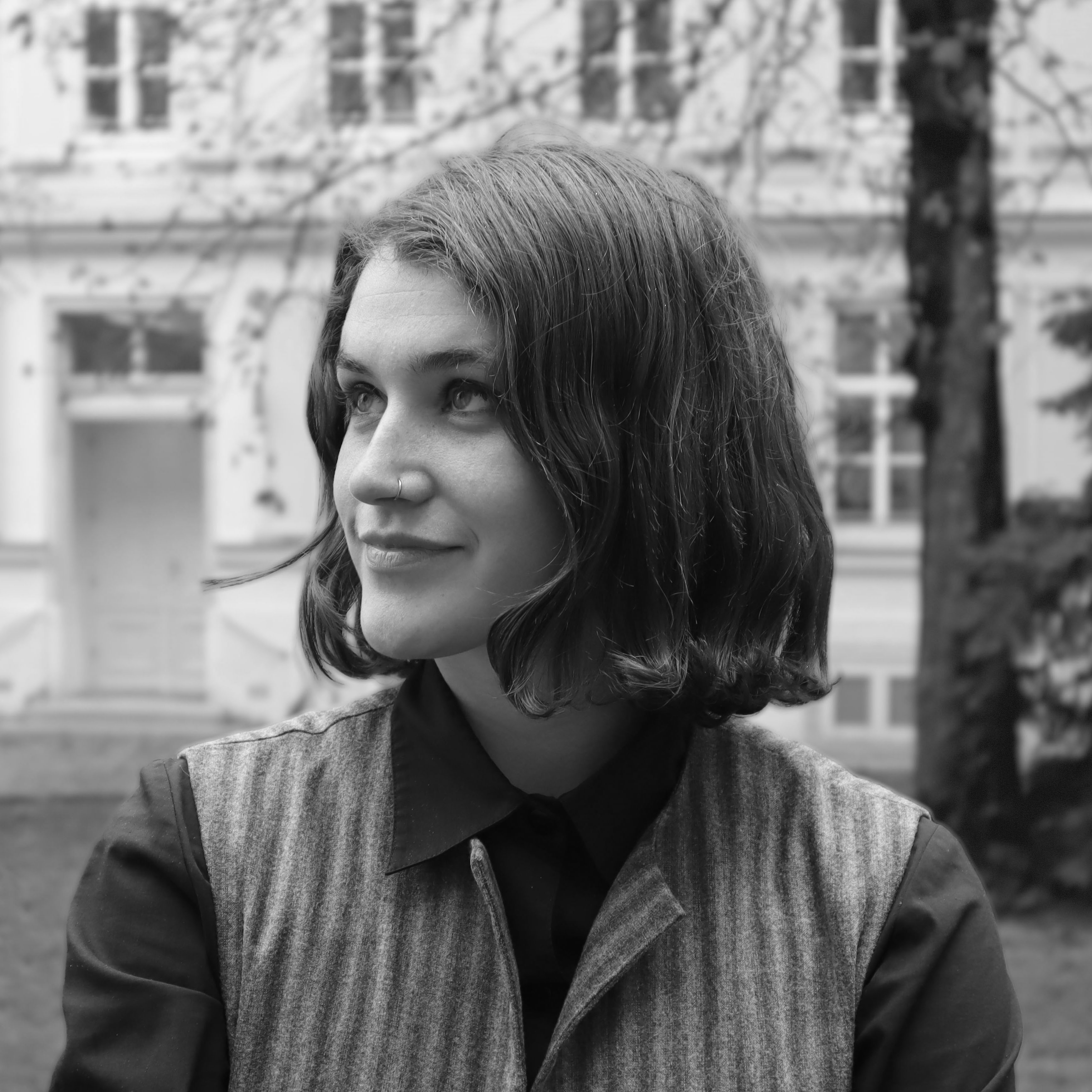
Carmen Lael Hines

Carmen Lael Hines is a new media theorist, writer and curator interested in tech, bodies and the implications of their entanglements. Working at the interface of technology, gender/sexuality studies and the political economy, from 2020– 2024, she taught in the Department of Visual Culture at the Vienna University of Technology and is currently pursuing a PhD in philosophy at the Academy of Fine Arts, Vienna. Her recent work engages: AI generated pornography, the plant complex, home automation and femtech. She is co-editing the book: Dissident Practices: Posthumanist Approaches to a Critique of Political Economy, to be published by Bloomsbury, and holds a BA in English Literature and Language from the University of Oxford and an MA in Contemporary Art Theory from Goldsmiths College. Relevant articles and exhibitions include: All Surfaces Clean at all Times(Never at Home + Klima Biennale Wien), Bordering Plants(Exhibit Galerie), Planetary Drift: Access if the new Capital(e-flux screening room NY x ACFNY ), Platform Austria(Austrian Pavilion, Venice Architecture Biennale 2021), “The Between of Urban Financialization in New York”(Informal Marketplaces. Nai010 2023) and “The Aesthetics and Architectures of Femtech” (Data After Nature After Nature, Skoden, 2022).
-
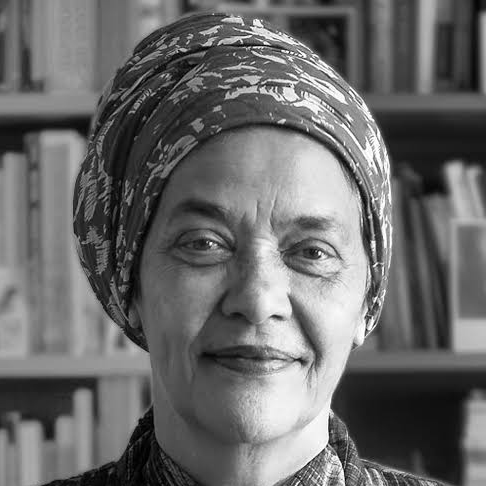
Françoise Vergès
Françoise Vergès (Reunion Island) is currently Senior Fellow Researcher, Sarah Parker Centre for the Study of Race and Racialization, UCL, London. A feminist anti-racist journalist and editor and a freelance writer in the 1980s in France, she held menial jobs in the USA (1983-1985) before entering the university. She got her Ph.D. in Political Theory at the University of Berkeley (1995). She was a co-founder of the collective “Decolonize the Arts” (2015-2020), has initiated decolonial visits in museums and proposed the notion of a “museum without objects” for the project of a “post-museum” in Réunion Island, that was politically defeated in 2010. She curates “L’Atelier”, a workshop and public performance with artists and activist (the more recent at the Berlin Biennale, 2022). Her doctoral thesis Monsters and Revolutionaries: Colonial Family Romance and Métissage was published by Duke University Press in 1999. Interested in the racial fabrication of “premature death” and in the multiple practices of resistance, she writes books and articles on the afterlives of slavery and colonization, climate catastrophe and racism, the impossible decolonization of the western museum, decolonial feminism, psychiatry, and the “post-museum.” Her publications include: Program of Absolute Disorder. Decolonizing the Museum (Pluto, 2024), A Decolonial Feminism (Pluto, 2021); The Wombs of Women: Race, Capital, Feminism (Duke University Press, 2020), Aimé Césaire, Resolutely Black. Conversations with Françoise Vergès (Polity, 2020). She has written documentary films on Maryse Condé (2013) and Aimé Césaire (2011), and was a project advisor for documenta11 (2002) and the Triennale de Paris (2011).
-
Helen Hester
Helen Hester (b. 1983, she/her) is Professor of Gender, Technology and Cultural Politics at the University of West London. Her research interests include technofeminism, sexuality studies, and theories of social reproduction. Her recent publications include: After Work: A History of the Home and the Fight for Free Time (with Nick Srnicek, Verso, 2023), Xenofeminism (Polity, 2018) and Beyond Explicit: Pornography and the Displacement of Sex (SUNY Press, 2014). Her latest book, Post-Work: What it is, why it matters, and how we get there (with Will Stronge) will be out with Bloomsbury later this year.
-
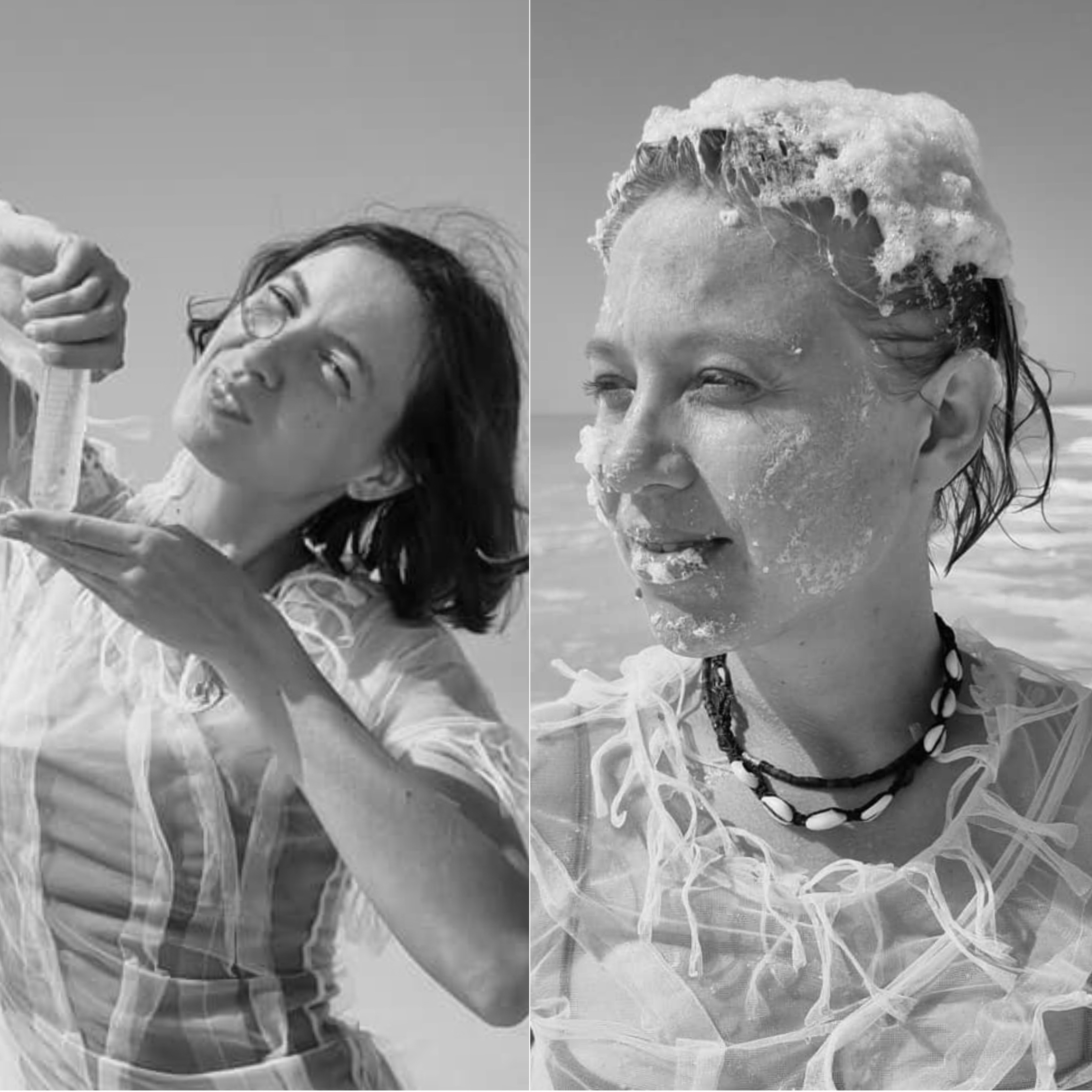
Cyber nymphs
Cyber_nymphs are Justyna Górowska (she/her) and Ewelina Jarosz (she/they). Justyna, who is a transmedia and performance artist, and Ewelina, who is a queer blue posthumanities writer and scholar, collaborate as art_research duo. They exchange skills, share knowledge, and work towards making the Blue Planet a lovable and desirable home for planetary survival. The duo infuses environmental art with elements of fun, sensuality, and diversity. They develop a transdisciplinary approach that bridges blue humanities and marine sciences and delve into digital art and eco-technologies to amplify ecological messages. Continuing the legacy of ecosexual artists, Annie Sprinkle and Beth Stephens, in 2023, they launched the hydrosexual movement in the arts, aimed at fostering a community of artists, academics, and activists sharing the love of water.
-
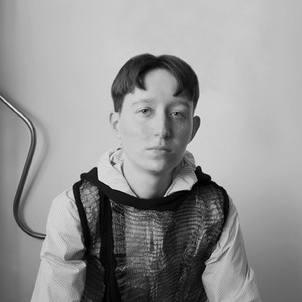
Francis Whorrall-Campbell
Francis Whorrall-Campbell is a writer and artist from the UK. Working across text, sculpture, and digital formats, their work explores and advances a trans poetics, probing the link between making an artwork and making a (gendered) self – or, how art and writing can be tools for transition. This practice is guided by research into materialist histories of trans becoming, including DIY transition, mutual aid, trans medicine, trans aesthetics, and other conditions which promote or inhibit trans survival. In 2025, The87Press will publish his first full-length monograph, a cover version of Dante’s Inferno as a t4t romance and pilgrimage to the titular London queer party.
He is also the author of THE REVOLUTION WILL NOT HAVE BEEN DOWNLOADED: [in progress] A non-fiction-novel about Kurt Cobain, Twink Death and the History of the Trans Internet, published in conjunction with an exhibition at Project Arts Centre, Dublin. From 2021-3, Francis was a Research Associate at the Centre for Contemporary Art Derry~Londonderry. From September – November 2024, he will be a Laureate of the Principal Residency Programme at La Becque, Switzerland. -
Dr. Tiara Roxanne
Dr. Tiara Roxanne is a Purhépecha (descendant) Mestiza scholar and artist based in Berlin. They currently work on developing protocols of trust and safety online with Indigenous communities based in Central and South America. Roxanne’s work is dedicated to rethinking the ethics of AI through an anti-colonial and cyberfeminist lens. As a performance artist and practitioner, they work between the digital and the material using textile. Currently their work is mediated through the color red. Tiara has presented at Images Festival (Toronto), Squeaky Wheel Film and Media Art Center (NY), Trinity Square Video (Toronto), European Media Art Festival (Osnabrück), University of Applied Arts (Vienna), SOAS (London), SLU (Madrid), Transmediale (Berlin), Duke University (NC), Tech Open Air (Berlin), AMOQA (Athens), Zurich University of the Arts (Zurich), Autonomous Intercultural Indigenous University (Columbia), Utrecht University (NL), University of California (San Diego), Laboratorio Arte Alameda, (Mexico City), among others.
-
cy x
cy x is a cyberwitch and pleasure ceremonialist moved by tremendous desire and obsession with glory holes, queer archives, magic, and more-than-human collaborations. They study the way that erotics and space co-construct each other and utilize their findings to create ritualized encounters through writing, sound, video, and performance. Their work has been shown in the Center for Art Research and Alliances, Culture Hub, Nest (The Hague), Pioneer Works, Rewire Festival, The School For Poetic Computation, and other spaces, both digital and physical.